
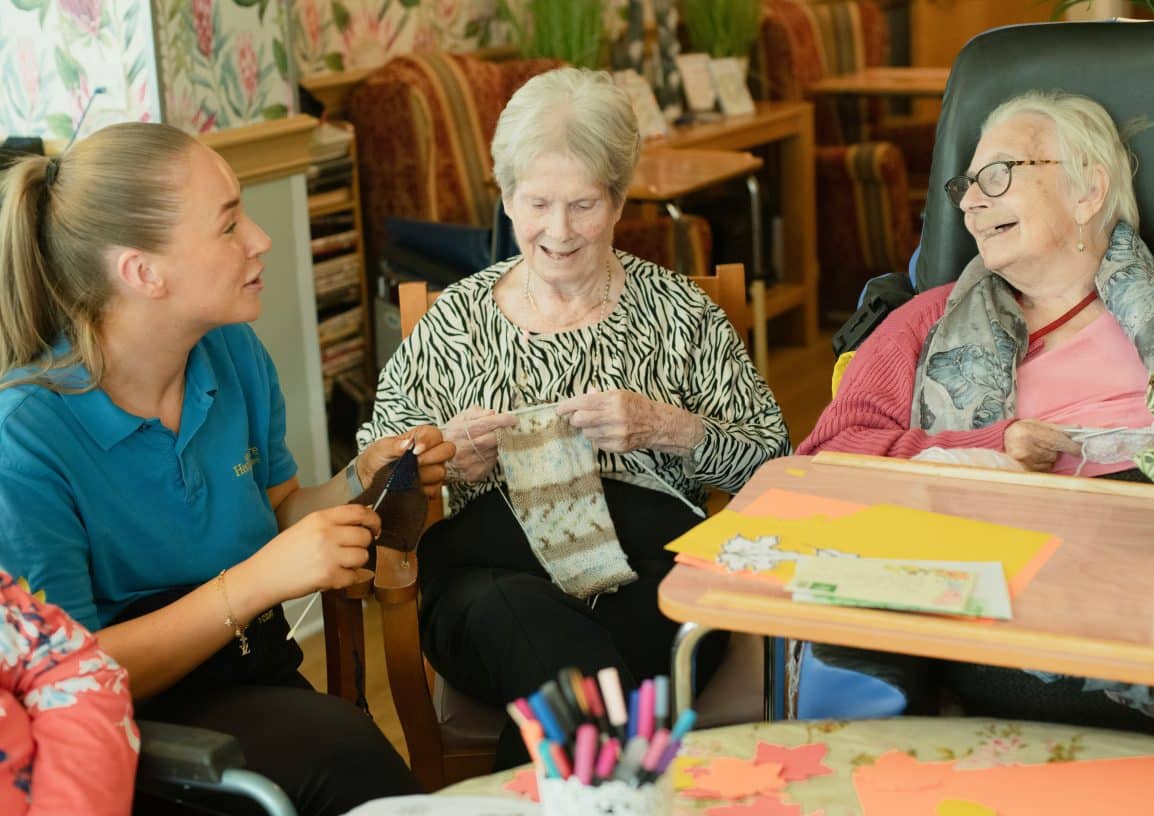
Signing up to volunteer at a senior living community sounds simple, and in a lot of ways it is. You show up, you say hello, you help with whatever is happening that afternoon. Most teens picture bingo and photo albums, and yes, there is usually bingo. What catches people off guard is everything around the activity: the pace of the building, how many staff are working, and whether anyone remembered you were coming.
None of that means the experience is bad. It means senior care is a real workplace with real pressure on it, and a volunteer who knows that walks in ready instead of hovering by the door.
What Do Teen Volunteers Do in a Senior Care Home?
Volunteering is more common than it looks from the outside. AmeriCorps and the Census Bureau reported in Volunteering and Civic Life that more than 28 percent of Americans formally volunteered with an organization over a one-year period, putting in close to 5 billion hours between them. Senior care absorbs a lot of those hours, because most of what helps is social.
Teen assignments usually fall into three groups. The first is activities: setting up a craft table, calling bingo numbers, playing piano if you play piano. The second is one-on-one time, which often means visiting a resident who does not get many visitors, reading out loud, going through photographs, or helping someone get a video call with a grandchild to connect. The third is behind the scenes, like folding newsletters or sorting out the activity closet nobody has touched since spring.
What you will not do is anything medical. Volunteers do not help residents walk, eat, or take medication, and a community that asks a teen to do any of that is doing it wrong. Staff should explain that boundary during orientation.
Why Some Communities Feel Warmer Than Others
Volunteer at two places and you will notice the difference within an hour. One has residents gathered in a bright common room and a staff member who knows every name. The other has quiet hallways, a rushed activities director, and nobody quite sure why you are standing there. The residents are not the variable. The staffing and the people in charge are.
Direct care work is short-handed almost everywhere. The Bureau of Labor Statistics projects employment of home health and personal care aides to grow 18 percent between 2025 and 2035, with roughly 760,500 openings a year, which is a polite way of saying the field cannot hire fast enough. When a shift is thin, the first thing that disappears is the unhurried conversation. That is the exact gap a volunteer fills.
The people running the building matter just as much, and those jobs turn over more often than families would like. Executive directors and activities directors move on, and the weeks around a change feel unsettled to everyone there. Communities often bring in an experienced manager on a temporary basis to hold things steady while they hire, and interim leadership in senior care is common enough now to be its own kind of career. So if a place feels scattered on your third visit, it is frequently not about you.
How to Sign Up as a Teen Volunteer
Call or email the community directly and ask for the volunteer coordinator or the activities director. Bigger chains have an online form, but a short email stating your age, your availability, and what you want to help with usually moves faster. Expect an age minimum, commonly 14 or 16, and expect it to be firm.
The paperwork is heavier than it is for a park cleanup. Most communities require a background check above a certain age, proof of a tuberculosis test, and an orientation covering privacy rules and handwashing. Add a week or two for all of it, the way you would when planning the summer before high school. Then ask who your point of contact is, and what to do if that person is out.
What the First Few Visits Are Like
The first visit is awkward. Everyone’s first visit is awkward. You will forget names, you will miss half of what someone says, and a resident may tell you the same story twice in twenty minutes. None of that is a problem you have to fix. Sit down, ask about the photo on the wall, and let the conversation move slowly.
Bring something small to do with your hands. A deck of cards, nail polish, a crossword, pictures from a decade someone lived through. An activity gives a quiet visit somewhere to go and takes the pressure off you to fill every silence. Watch how staff greet people and copy it, including when they step back.
Some residents will not want company that day, and that is allowed. If distance or a packed schedule makes regular shifts hard, this remote volunteering guide covers letter-writing and phone-visit programs that pair young people with older adults.
What Volunteering in Senior Care Teaches You
The obvious payoff is the line on your resume, and it is a good line. A single service day is easy to sign up for. A standing Saturday shift is what a teacher or manager can write a recommendation about. Holiday service days are worth doing, and To Serve Mankind lists several, but they work best as a way into something regular.
The less obvious payoff is that you learn to read a room full of adults. You notice which staff are stretched thin, which managers walk the halls and which stay in the office, and how much of a resident’s week depends on decisions made by people they never meet. Go in expecting a real workplace, ask for a real assignment, and stay long enough that people learn your name. Consistency registers with residents far more than enthusiasm does, which you figure out around the fourth visit, when someone has saved you a seat.

