
Introduction
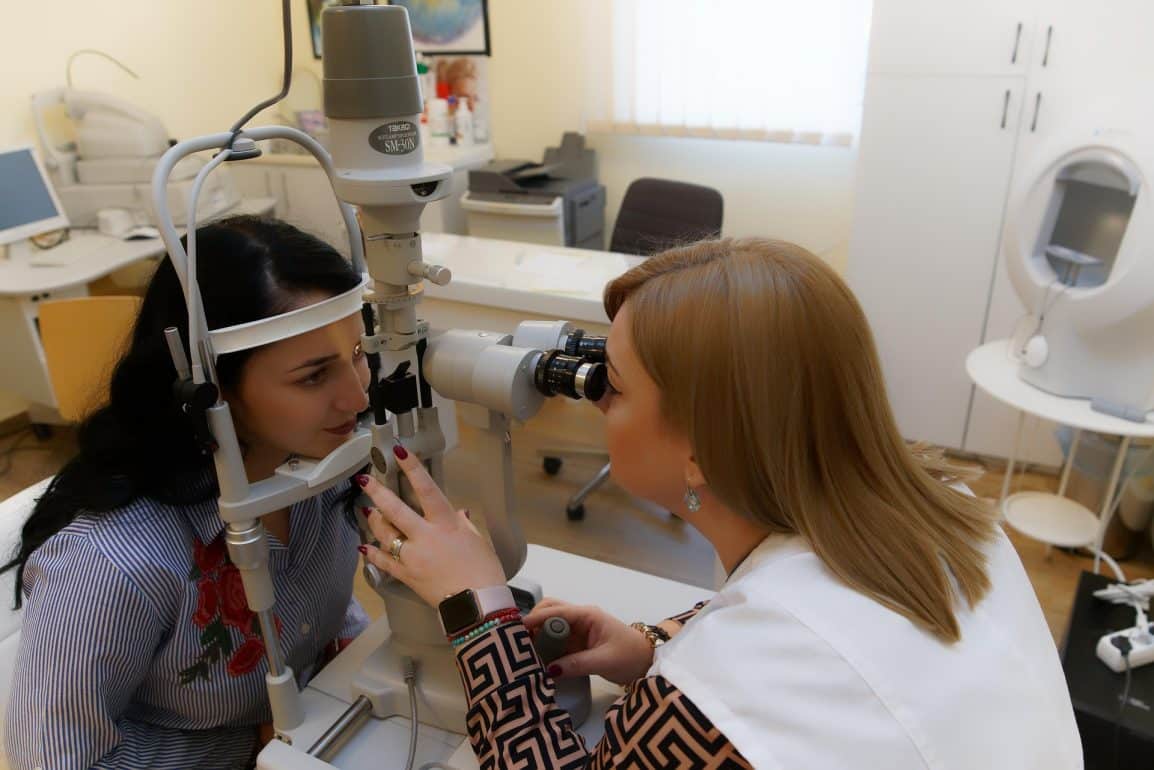
Your eyes are an important part of everyday life as you use them to see the world around you, leading you to combine what you perceive into knowledge to use later on throughout your life. If one suddenly lost the ability to see or suddenly couldn’t see as they could before, they would probably be thrown into a state of confusion, despair, or hopelessness. It is thanks to the help of ophthalmologists and optometrists that people who experience these situations in everyday life get to continue on with the same or similar quality of life as before. I interviewed optometrist Dr. Sandra Wang-Harris an associate professor and a former fellow for the World Council of Optometry to discover more about this profession
Optometry vs. Ophthalmology
Optometry and ophthalmology can sometimes get confused with each other as they both are studies of the eyes. Dr. Wang-Harris explains it like so: “Both do eye care but optometry is more detailed in terms of care and medication, but they don’t do any of the major surgeries that ophthalmology does. Optometry also specializes in the head and neck up including neuromuscular disorders.”.
The Road to Optometry
Growing up Dr. Wang-Harris did not always know that she wanted to be an optometrist. She was always interested in eyes growing up and did a science project in the 8th grade on color vision and the human, but she didn’t choose optometry as a future profession until undergrad. In undergrad she attended the University of Georgia and majored in music on scholarship. At that time in her life she did not know what she planned to pursue yet though in high school she accumulated numerous musical awards and was even an allstate player. Through these numerous musical awards she was offered scholarships from multiple colleges to do music and she could not turn these offers down.
She comments that choosing to major in music ‘helped me to get to the school I needed to be at’ and it allowed her to get a wide comprehension of the humanities and liberal arts instead of just focusing on science. Through attending UGA she was able to find her passion in healthcare and through this she knew that she wanted to help people. Additionally she mentions that she went to optometrists very often growing up so optometry felt like a natural fit for her. She also shadowed and worked under an optometrist in undergrad, contributing to her solidifying the career path of an optometrist.
Pride and Prejudice
To become an optometrist you need to go to optometry and to apply you need a bachelor’s degree and meet a minimum amount of math and science courses. You need to shadow, gain work experience, take the optometry admissions test or the MCAT, have letters of recommendation, and participate in an interview. Dr. Wang-Harris states that she had no difficulties with prejudice when training, though most of it came after. She is ethnically Chinese so when she would treat patients they would say things like “Hey jap” or ask things like “What country are you from? Where do you come from?”. This was the 1990’s in the south, so she took it as uneducated rural people who didn’t know what the world was like. Dr. Wang-Harris states that gender was more of an issue than race was.
When she worked at the Veterans Administrations Hospitals since there were mostly male veterans she said they would look at female doctors funny, say things, or make sexual remarks. She does not face such experiences today as the world has changed from what it was in the past.
HIV Clinic
Additionally, Dr. Wang-Harris started the first eye clinic for HIV patients in North Alabama. She notes that she saw a need and sought to fill that need. At the time there was a huge stigma around HIV positive patients and because of that stigma the community was largely underserved in terms of medical treatment. Because of high viral loads found in HIV positive patients that led to more diseases of opportunity to arise and for the patients to acquire diseases not common in today’s world. These infections and diseases could affect many parts of the body including the eyes. When she started the clinic there was already a clinic for HIV patients but not for vision specifically so she started her own.
Disparities in Vision Care
Dr Wang-Harris also served as a fellow for WCO (World Council of Optometry) in Nepal. She was the only faculty member of the Tribhuvan Institute of medicine in their newly started optometry program. During this time she was responsible for all of the students in the program and had to be there for them at all times of the day, granted there were only around 21 of them. She notes that in underserved countries the scope of practice is much more limited. There, optometry is limited to finding out what patients need for glasses; they are not allowed to medicate, diagnose, or treat diseases of the eye. In spite of these stipulations Dr.Wang-Harris trained her students the way they do here in the U.S including things like pathology and diagnoses.
Dr. Wang-Harris comments that optometry disparities stem/come with social and socioeconomic disparities. This includes underserved communities and rural areas. In order to resolve optometry based disparities we must attempt to fix these barriers first. People can help serve by aiding areas that need food or places like nursing homes, or preschools. Additionally there are many organizations that organize pop up clinics where they do free vision screenings or give away individually tailored glasses. Dr.Wang-Harris mentions ramusa.org as one of these organizations.
Closing Note
As a final note, Dr.Wang-Harris mentions that anybody interested in optometry does not have to go down the ‘normal’ path. There are many specialties within optometry such as; dry eyes, low vision geriatrics, pediatrics, rehabilitation, brain trauma, stroke victims, nursing home optometry, and standard optometry, and corporate optometry. What you do is up to you, but all in all optometry has a great work-life balance and freedom in schedule. Get ready for a ride!
