
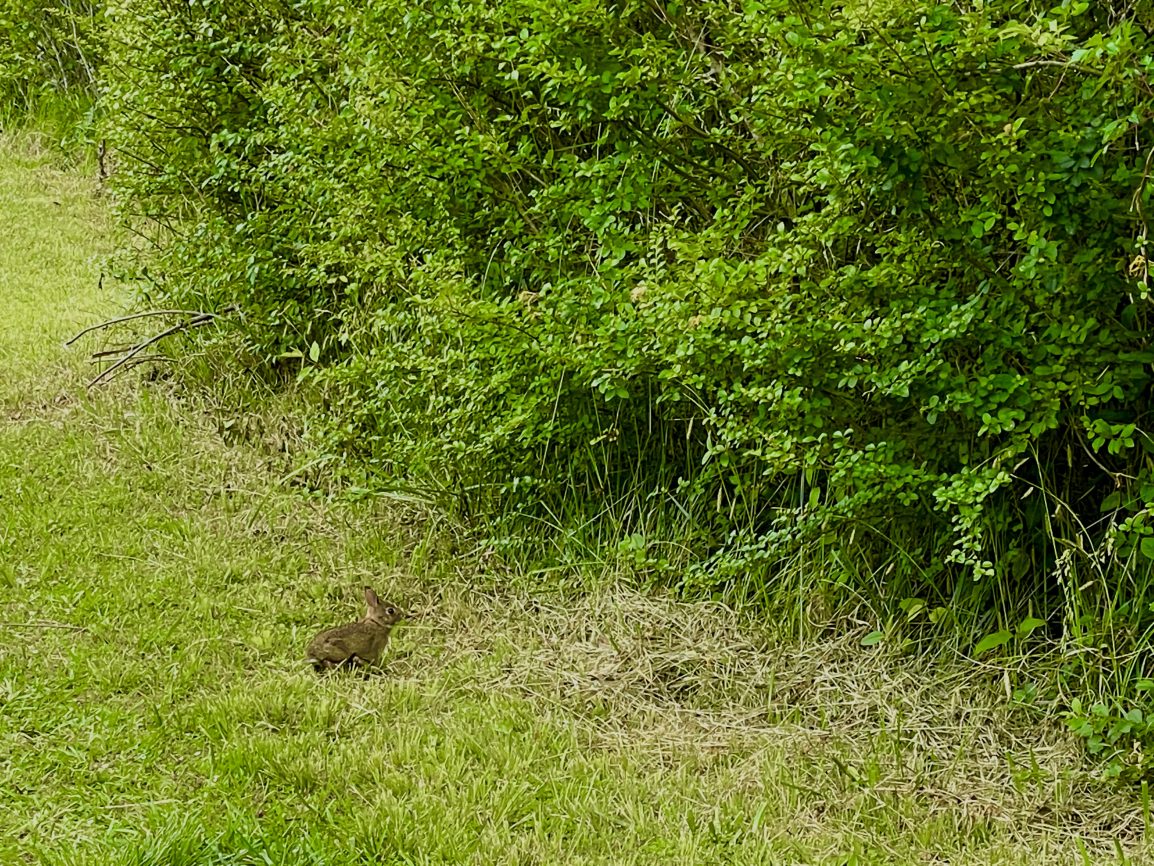
Search “calming pets,” and you’ll get a wall of soft-focus photos and almost no useful information. Rabbits show up on nearly every one of those lists, usually described as quiet and low-maintenance. One of those two words is accurate. The better question is not whether a rabbit is calming, but whether the particular kind of work a rabbit asks for is work you actually want to do every day for the next decade.
That question deserves a real answer, because the reason people ask it is usually real too.
The Numbers Behind the Question
Anxiety is not an unusual thing to be carrying at sixteen. The National Institute of Mental Health puts the lifetime prevalence of anxiety disorders among adolescents at 31.9%, and the gap between girls and boys is wide: 38.0% compared to 26.1%. Of the teens who meet criteria, an estimated 8.3% experience severe impairment, meaning the symptoms interfere with school, sleep, and friendships rather than just making a Monday harder.
The pressures underneath those numbers are not mysterious. Online bullying and academic pressure come up again and again when teens describe what is actually wearing them down, along with the constant comparison that arrives with social media. So the impulse to look for something steadying is not silly. It is a reasonable response to a real load.
What a Pet Can and Cannot Do
There is decent evidence that time with animals shifts stress physiology. Interacting with a pet has been linked to lower cortisol levels and blood pressure, and about 80% of pet owners say they turn to their animals during stretches of loneliness. That is a genuine effect, and it is also modest.
None of it makes a rabbit a treatment plan. A pet is not therapy, not medication, and not a substitute for telling a parent, counselor, or doctor that you are struggling. What a pet can do is smaller and still worth something: give you a reason to be in your body, in a room, doing something with your hands, at a predictable hour. If you are dealing with anxiety that interferes with your daily life, a rabbit is a nice addition to a support plan, not the plan itself.
Why a Rabbit, Specifically
Rabbits are prey animals. Their entire nervous system is organized around scanning for threats, which means two things at once. They will not tolerate a loud, chaotic, unpredictable household. They are also unusually good at rewarding stillness.
A rabbit will not jump on you, bark at you, or demand that you perform enthusiasm you do not feel. It will decide, on its own schedule and after weeks of watching you, that you are safe enough to flop down next to. For a teenager who finds constant social demand exhausting, being approached by an animal that also dislikes being crowded is the opposite of draining. It is one of the few relationships where doing less is what works.
The trade-off is real, though. Most rabbits hate being picked up, because being lifted off the ground is exactly what a predator does to them. If the pet you are picturing is one you carry around and hold on your lap while you do homework, a rabbit will disappoint you, and that disappointment will not be the rabbit’s fault.
The Routine Is the Actual Benefit
This is the part that gets skipped in favor of the photos. The mechanism that makes an animal steadying for an anxious person is mostly structure, not softness.
Predictable daily schedules do measurable work. A 2025 study reported by UCLA Health found that people who kept consistent sleep and wake times had a 38% lower risk of depression and a 33% lower risk of anxiety than irregular sleepers. The detail that matters most: irregular sleepers who still logged the recommended number of hours did not get the same protection. Regularity itself was the active ingredient, not the total.
A rabbit imposes that kind of regularity whether or not you feel like being regular. Hay gets topped up in the morning and at night. The litter box gets changed. Water gets refreshed. Floor time happens at roughly the same hour because the rabbit starts thumping when it doesn’t. On the days when anxiety makes every decision feel expensive, having one task that is not optional and not about you is quietly, unglamorously useful.
What Daily Care Actually Requires
Rabbits are only low-maintenance compared to dogs, and even that is generous.
Hay is the center of everything, and it is where most owners fail. The PDSA’s Animal Wellbeing Report found that 42% of veterinary professionals named inappropriate diet among pet rabbits one of the five most important welfare problems for the species, and that only 73% of owners feed hay as one of their rabbit’s main foods. Hay is not bedding and not a snack. It is the majority of the diet, available every hour of the day, because rabbit teeth never stop growing and their digestive systems stall without constant fiber moving through.
Past hay, a rabbit needs a pelleted food built on timothy rather than filler grain, safe chews and foraging toys, absorbent litter, and a comb for the twice-yearly shedding season. The full range of rabbit food, chews, and habitat supplies is narrower than a pet-store aisle suggests and far less forgiving than it looks, which is why swapping in a colorful muesli mix instead of proper pellets is one of the specific diet failures the PDSA data keeps flagging. Enrichment is not decoration either. A rabbit with nothing to shred will shred your baseboards, and a bored rabbit becomes a destructive one.
Companionship is the other requirement people underestimate. The same report found 42% of pet rabbits live alone, despite rabbits being a social species that generally does best when bonded to another rabbit. Two rabbits are not twice the work, but they are twice the hay and twice the vet bill.
When a Rabbit Is the Wrong Answer
Be honest about the timeline first. Pet rabbits commonly live nine to twelve years. If you are fifteen, that rabbit will outlast high school, most of college, and possibly your first apartment. The person who cared for it during your freshman year is your parent, and that conversation belongs before the adoption, not after.
Be honest about the household. A prey animal living in a house with loud dogs, small siblings, and constant noise will spend its life managing fear, and a rabbit that spends nine years frightened is not a wellness accessory. It is an animal having a bad time so that someone else can feel calmer.
Be honest about money, too. Rabbits need a veterinarian who treats exotics, a smaller and more expensive category than a general small-animal practice, and they hide illness until it is advanced, which means the emergency visit is not hypothetical. If the budget only stretches to the adoption fee and a bag of hay, the answer for right now is no, and there is no shame in that.
How to Find Out Before You Commit
The cheapest test costs nothing. Set alarms for the real schedule — morning hay, evening hay, litter box, floor time — and keep them for two weeks with no rabbit involved. If you resent the alarms by day four, that is useful information, and you learned it without an animal paying for the lesson.
After that, volunteer at a rabbit rescue or a shelter with a small-animal wing. You will spend a few hours around a dozen rabbits, learn what they smell like and how much hay actually disappears in a day, and talk to people who will tell you the unflattering parts. Many rescues also run foster programs, which let you live with a rabbit for a defined stretch with supplies and support included.
So, Are Rabbits Good Pets for Anxious Teens?
For the right teenager in the right house, yes, though not for the reason the listicles give. It is not the softness. It is that a rabbit will not let a day dissolve. Something needs hay at seven in the morning, whether or not you slept, whether or not the group chat went badly, whether or not you feel like a person yet. The animal does not care about your mood, and on certain days that indifference is exactly the point.
If that sounds steadying, a rabbit may be a good fit. If it sounds like one more thing you would eventually fail at, that reaction is worth taking seriously rather than talking yourself out of. And if the anxiety underneath the question is the bigger issue, the more useful next step is a conversation with a parent, school counselor, or doctor with or without a rabbit in the room.

