
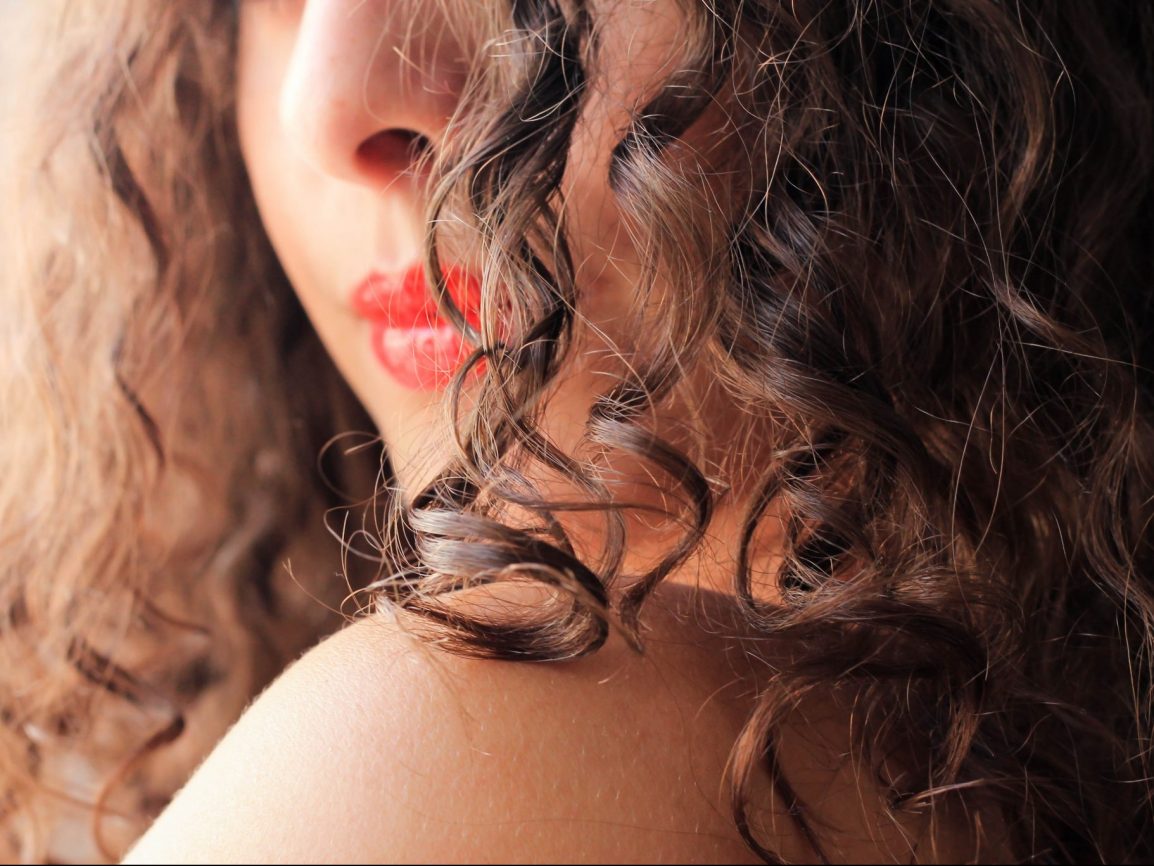
Frizzy curly hair is one of those things that feels deeply personal and deeply unfair. Straight hair just… hangs there. Behaves. Meanwhile curly girls are out here battling humidity, shrinkage, and that mysterious halo of frizz that appears out of nowhere.
Frizz isn’t random, though. It happens for specific reasons, and once those reasons make sense, fixing it gets easier. The right products help – switching to a shampoo bar for curly hair that doesn’t strip moisture, using a leave-in conditioner that actually works, finding styling products that define without crunch. But products only work when they’re solving the right problem.
So. What’s causing it?
What’s happening when hair frizzes
Every hair strand has an outer layer called the cuticle. Think of it like shingles on a roof – when they lie flat, the hair shaft looks smooth and shiny. When they lift up, light scatters and the strand looks rough. That’s frizz.
Curly hair is more prone to this than straight hair because of the shape. Each bend in the curl pattern is a weak point where the cuticle can lift. Straight hair strands lie flat against each other. Curly ones don’t. More texture, more opportunity for frizz.
The 5 biggest causes of frizzy curls
- Moisture imbalance
This one’s tricky because frizz can come from too little moisture OR too much. Dry hair has raised cuticles desperately trying to absorb water from the air. High humidity gives them plenty to grab onto – which is why curls poof up on humid days.
High porosity hair has this problem worse. The cuticle is already raised (from damage or just genetics), so moisture moves in and out too easily. Damaged hair acts the same way.
- Harsh products
Sulfates strip natural oils from the hair shaft, leaving curls dry and frizzy. Some curly hair products contain heavy silicones that build up over time, weighing curls down and blocking moisture. The wrong shampoo can undo everything else.
Ethique’s Curl-Defining Shampoo Bar is sulfate-free and made specifically for curly hair – clinical testing shows 70% increased shine, which means smoother cuticles and less frizz. The matching conditioner improves manageability by 6x.
- Heat damage
Blow dryers, flat irons, curling wands. Heat styling damages the cuticle permanently over time. Even occasional high heat adds up. The best products in the world can’t fully repair a fried cuticle – they can only mask the damage temporarily.
- Rough handling
Regular towels create friction that roughs up the cuticle. Brushing dry curls? That breaks up the curl pattern. And detangling too aggressively just snaps hair strands.
- The wrong drying technique
Rubbing wet hair with a towel creates instant frizz. Same with scrunching too hard. And if excess water isn’t removed before applying products, those products get diluted and stop working properly.
How to stop it
Ditch the regular towel
A microfiber towel or a plain cotton t-shirt makes a noticeable difference. These absorb extra water without creating friction. Squeeze – don’t rub. The goal is removing excess moisture gently.
Some people “plop” – wrapping wet hair in a t-shirt on top of the head to let curls form while drying. Worth trying.
Detangle carefully
Only detangle wet hair, ideally with conditioner in it. Use a wide tooth comb and work in small sections, starting from the ends and moving up. Never start at the roots and pull down – that’s how hair snaps.
Layer products strategically
Defined curls come from applying products to wet hair in the right order. Leave-in conditioner goes first for moisture. Then styling products for hold and curl definition. Natural oils can seal everything in, but go light – too much creates greasy, weighed-down curls.
Deep condition weekly
A deep conditioner or hair mask once a week helps repair and prevent damage. Deep conditioners penetrate the hair shaft better than regular conditioner, and for very dry hair or high porosity hair, this makes a real difference.
Limit heat
Air drying is gentlest. If using a blow dryer, use a diffuser attachment on low heat. Cutting back on heat styling means less cumulative damage to the cuticle.
Finding the right products for your hair type
Not all curly hair is the same. What works for loose waves won’t necessarily work for tight coils. Curl type matters, but so does porosity, thickness, and density.
Fine, naturally curly hair does best with lightweight products – anything too heavy flattens the curl pattern. Thick curls can handle richer formulas. Porosity matters too: high porosity hair loses moisture fast, so heavier, sealing products help. Low porosity is the opposite – lighter products that won’t just sit on the surface.
The best curly hair products are the ones that match YOUR specific combination. This takes experimenting. Curly girls online share what works for their hair types – good starting point, but everyone’s hair is a little different.
The realistic version
Instant frizz control isn’t really a thing. Anyone promising zero frizz ever is lying. Curly hair has texture. Some amount of frizz is just… curly hair being curly hair.
But unmanageable frizz? The kind that takes over? That’s fixable. Usually it comes down to one or two of those five causes. Could be the shampoo is too harsh. Or the towel creating friction. Sometimes it’s heat damage that just needs time to grow out.
Start with one change at a time. Swap the towel first. See what happens. Then look at products. Then technique.
Frizzy curls don’t have to stay that way. But there’s no universal fix – just what works for your hair.

