
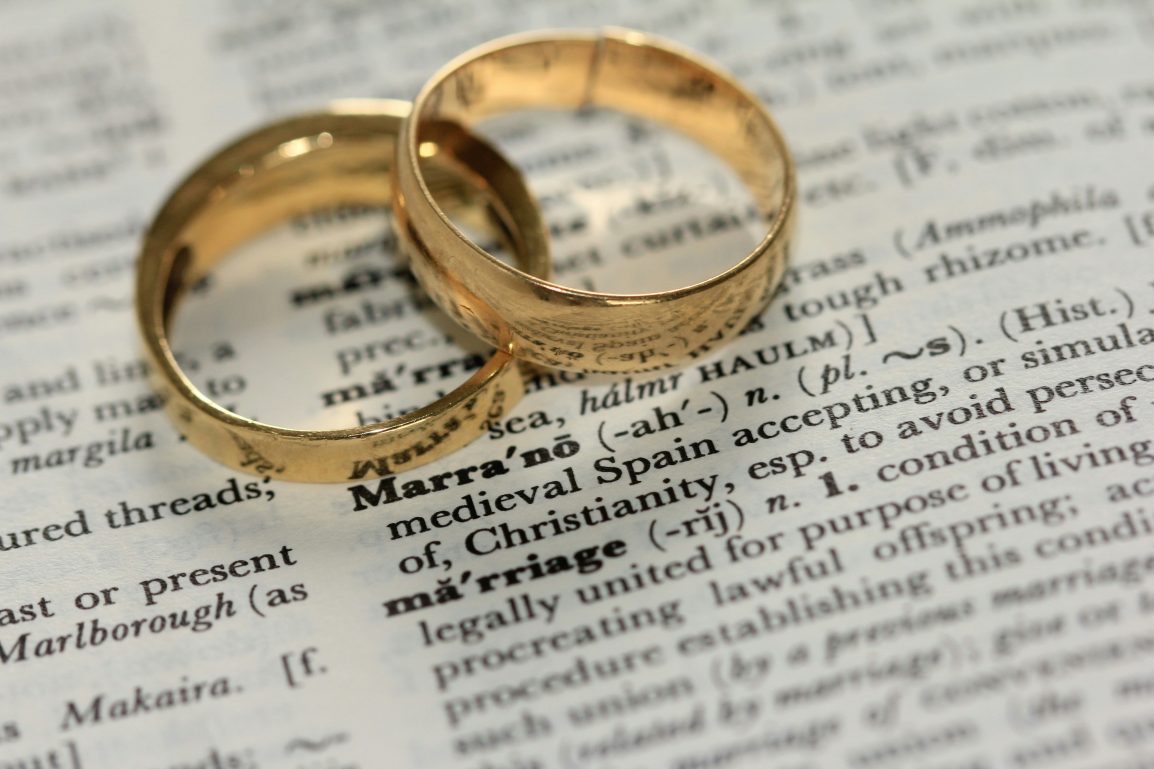
According to Cambridge University, in a study conducted by Dr. Mark Dyble [1], humans are the seventh most monogamous species on Earth [2]. With such a strong pull toward long-term relationships, it makes sense that nearly every society in history created some promise of fidelity between two individuals. While the concept of marriage is a straightforward and sweet promise, in practice it has often been far more complicated. When studying the history of marriage and the current realities of its function, it is revealed how marriage created systematic disadvantages that to this day disproportionately affect women.
Disclaimer
Before beginning, I want to emphasize that this is not meant to serve as either a discouragement or encouragement for marriage, nor to judge marriage entirely as an institution. In the United States, marriage has made significant strides toward equality. Nevertheless, statistical evidence shows that there is still work to be done before full equality is achieved.
Historical Marriages
Marriage is one of the oldest practices in human history, with its earliest surviving record of marriage is approximately 4,375 years old, dating back to 2350 B.C. Mesopotamia. Across thousands of years and countless societies, it is impossible to fully cover the history of marriage. Because I am focusing on marriage in the United States, I will be primarily referencing marital practices in Western Europe over the past 500 years due to its direct affect on modern American marriage.
Due to Hollywood and the patriarchal rewriting of history, when imagining historical marriages, many assume that it was between a young powerless girl and her all powerful older husband. While recognizing that marriage was used for hundreds of years to suppress women both legally and socially, the fact of the matter is that general marital practices in history weren’t what Hollywood has made them out to be.
Common Misconceptions
First of all, marriage was a private affair between two consenting individuals that involved neither the law, the church, nor parents until the mid-16th century [3]. Two individuals simply needed to agree that they were married, and then they were. Likewise, once they agreed that they were no longer married, they were no longer married. For much of history, marriage was not always the rigid, state-controlled institution that many assume it was.
Second, during the pre-Industrial Revolution, the average age of marriage for both parties – especially amongst commoners – was typically in the mid-twenties [4]. In fact, between 1500 and 1800 in urban areas, many women didn’t marry until their thirties or even their forties [5]. In the majority of cases, marriage was, as it is now, between two adults.
Third, the idea of the “traditional wife,” a woman who manages the children and household – basically never existed outside of the 1950s in North America. For most of history, a family was either nobility or peasants. Noble women did not raise their children and certainly did not clean up after anyone—they had servants for that work. In peasant families, every single member of the household worked. Women labored alongside men on farms, in domestic production, and later in factories, making economic dependence the exception rather than the rule.
These misconceptions are rampant but are based on a morsel of reality. Among the nobility, marriage did occur at alarmingly young ages, but these unions were based on power rather then affection. Marriages could be arranged before an individual was born and the of the marriage consummation wouldn’t happen until the late teens or early twenties. After a few children, couples would remained legally married while fulfilling emotional needs with extra martial affairs. This type of marriage applied to roughly 0.5% of the population, yet it has become the standard modern ideal of historical marriage.
On a side note, if you want to know what people of the past would have actually thought of Game of Thrones–type marriages, look at how they reacted to Lady Margaret Beaufort [6].
Trigger warning:
The following paragraph discuss inequality, sexual assault, and abuse. If you don’t want to wish to read about those subjects, please scroll to the paragraph after.
Disturbing Facts
Now knowing the reality of historical marriages, its time to see the realities of modern marriages. Although modern marriage has undeniably progressed in terms of legal equality compared to even fifty years ago. In the 1870s, Alabama and Massachusetts made domestic abuse illegal but it wasn’t defined nor prosecuted across all fifty states until the mid 1970s [7]. It wasn’t until l993 that material rape was recognized and made illegal in all fifty states [8]. It wasn’t until 2010 that all fifty states adopted no-fault divorce [9]. Today, under the law, women can divorce their spouses for any reason, and it is illegal for their spouses to assault or abuse them. Despite these laws, 51.1% of all perpetrators of assault committed against women are their intimate partners [10], and one in three murdered women is killed by their husbands, with 1,683 confirmed victims a year.
Modern Marriages
Unfortunately, marital inequalities do not end there. For example: the motherhood penalty. The motherhood penalty is a measurable form of employment and earnings discrimination faced by women who have children. Married women are also affected by this penalty due to the assumption that they will eventually become mothers. In contrast, men experience a “fatherhood bonus,” in which marriage and parenthood increase their earnings and employment opportunities [11].
These inequalities are also reflected in the home. Despite increasing wages and employment, women still are the primary homemakers. When a woman gets married, she will spend an extra three hours a week – 165 extra hours a year -on housework compared to her husband, who will receive three extra hours of leisure [12]. Regardless of either patterns employment status, women also spend more time on childcare [13] and provide more emotional labor in relationships and marriages via emotional comfort, regulation, guidance, and organizing and planning daily tasks [14]. These invisible hours and burdens may be lesser then in decades past, but their continuous existence within marriages remains detrimental to women’s happiness and both emotional and physical health.
The Potential of Marriage
Marriage, in its simplest form, is a wholesome testament to love. Its history, though messy and at times problematic, reflects its sweet nature despite the misconceptions surrounding it. Today, marriage is nearly as legally equitable as it has ever been. However, by overlooking its current issues and focusing only on the fantasy we hold about historical marriages, we are prohibiting marriage from reaching true full legal, economic, and social equality.
Citations:
-
Cambridge University Architecture Department
Dyble, Mark. Dr. Mark Dyble | Staff. University of Cambridge Department of Architecture, https://www.arch.cam.ac.uk/staff/dr-mark-dyble. Accessed 31 Jan. 2026. -
Cambridge University Story Page
“Monogamy League Table.” Cambridge University, https://www.cam.ac.uk/stories/monogamy-league-table. Accessed 31 Jan. 2026. -
JSTOR Book Source
(Assuming this is a book or chapter — since the stable link is given but not the title on the URL, include as below with placeholder title if you want to refine further with author/title.)
Author Last Name, First Name. Title of Book or Chapter. Publisher, Year. JSTOR, https://www.jstor.org/stable/j.ctt3fj1mn. Accessed 31 Jan. 2026. -
Archive.org — The World We Have Lost
Clark, Peter. The World We Have Lost: England Before the Industrial Age. Penguin Books, 1994, p. 99. Internet Archive, https://archive.org/details/TheWorldWeHaveLost/page/n99/mode/2up. Accessed 31 Jan. 2026. -
Archive.org — The Marriage History Book
Coon, Carleton S. The Story of Human Marriage: Its Basis and Development. Harvard University Press, 1954. Internet Archive, https://archive.org/details/marriagehistoryh0000coon/page/n5/mode/2up. Accessed 31 Jan. 2026. -
Wikipedia — Lady Margaret Beaufort
“Lady Margaret Beaufort.” Wikipedia: The Free Encyclopedia, 31 Jan. 2026, https://en.wikipedia.org/wiki/Lady_Margaret_Beaufort. Accessed 31 Jan. 2026. -
National Women’s History Alliance Timeline
“Detailed Timeline of the Women’s Rights Movement.” National Women’s History Alliance, https://nationalwomenshistoryalliance.org/resources/womens-rights-movement/detailed-timeline/. Accessed 31 Jan. 2026. -
Psychology Today Article
Reynolds, Emma. “Marital Rape Is Criminalized — Not Upheld.” Psychology Today, March 2022, https://www.psychologytoday.com/us/blog/mind-games/202203/marital-rape-is-criminalized-not-upheld. Accessed 31 Jan. 2026. -
CNN Article
Hall, Louise. “No-Fault Divorce Explained: History and Wellness.” CNN, 27 Nov. 2023, https://www.cnn.com/2023/11/27/us/no-fault-divorce-explained-history-wellness-cec. Accessed 31 Jan. 2026. -
RAINN Statistics Page
“Statistics: Perpetrators of Sexual Violence.” RAINN, https://rainn.org/facts-statistics-the-scope-of-the-problem/statistics-perpetrators-of-sexual-violence/. Accessed 31 Jan. 2026. -
Demography Journal Article — Duke University Press
Author Last Name, First Name, and Second Author First Last. “The Accumulation of Economic Disadvantage: The …” Demography, vol. 59, no. 4, 2022, pp. 1377–??. Duke University Press, https://read.dukeupress.edu/demography/article/59/4/1377/315802/The-Accumulation-of-Economic-Disadvantage-The. Accessed 31 Jan. 2026. -
NPR Article
Cohen, Patricia. “Pew: Earnings, Gender Wage Gap, Housework, Chores, Child Care.” NPR, 13 Apr. 2023, https://www.npr.org/2023/04/13/1168961388/pew-earnings-gender-wage-gap-housework-chores-child-care. Accessed 31 Jan. 2026. -
U.S. News Health News Article
Author Last Name, First Name. “Gender Reveals Data Shows Disparities in Child Care Roles.” U.S. News & World Report, 11 May 2023, https://www.usnews.com/news/health-news/articles/2023-05-11/gender-reveals-data-shows-disparities-in-child-care-roles. Accessed 31 Jan. 2026. -
BBC Worklife Article
Smith, Rebecca. “The Hidden Load: How Thinking of Everything Holds Mums Back.” BBC Worklife, 18 May 2021, https://www.bbc.com/worklife/article/20210518-the-hidden-load-how-thinking-of-everything-holds-mums-back. Accessed 31 Jan. 2026.

